🎉 Up to 70% Off Selected ItemsShop Sale

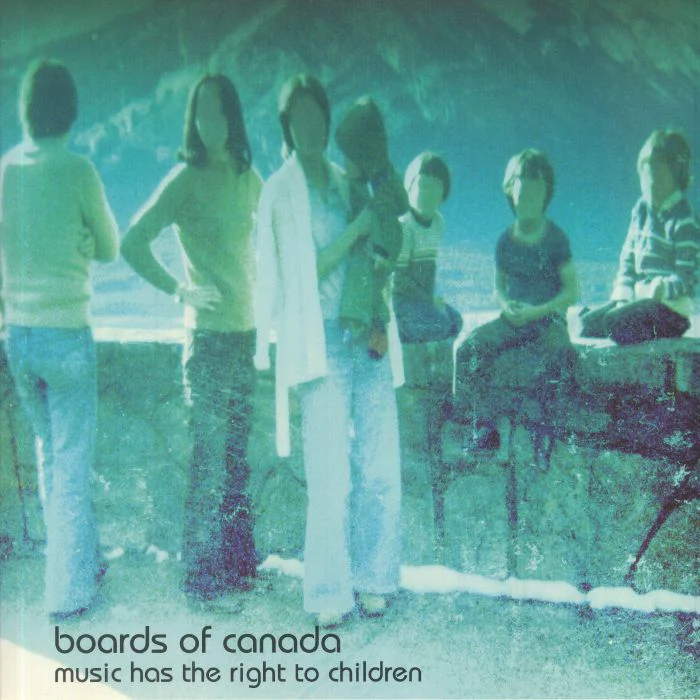

Music Has The Right To Children
‘Music Has the Right To Children’ arrived in 1998 as a joint release from Warp and the burgeoning Skam imprint, and proved a seminal release which helped define Warp’s place in electronic music’s hall of fame, and gained the introspective, mysterious sounds of duo Boards of Canada a powerful cult following.
The album created a strange influence in its singular combination of hip-hop rhythms and more nostalgic elements drawn from a mid- 20th century electronic culture that was distinctly British. ‘One Very Important Thought’ resurrected the voice of an automated documentary narrator to remind one of the prevalence of censorship in contemporary culture over distant meandering synths in a way that was bizarrely nostalgic yet of no time at all, while ‘Smokes Quantity’ reigns the same archive voices onto chugging beats to hallucinatory effect.
It is, however, cuts like ‘Roygbiv’ and ‘Pete Standing Alone’ which remain the reason why the album remains a cornerstone for countless musicians today, where naïve synth lines and crunching hip-hop beats manage to induce the listener to a state at once pastoral and urban, recalling the past while avoiding mere replication of it. ‘Music Has the Right To Children’ offers as rich and mind-boggling a listen now as when it was released a decade and a half previously, and one cannot comprehend the landscape of contemporary electronic culture without it.
The album created a strange influence in its singular combination of hip-hop rhythms and more nostalgic elements drawn from a mid- 20th century electronic culture that was distinctly British. ‘One Very Important Thought’ resurrected the voice of an automated documentary narrator to remind one of the prevalence of censorship in contemporary culture over distant meandering synths in a way that was bizarrely nostalgic yet of no time at all, while ‘Smokes Quantity’ reigns the same archive voices onto chugging beats to hallucinatory effect.
It is, however, cuts like ‘Roygbiv’ and ‘Pete Standing Alone’ which remain the reason why the album remains a cornerstone for countless musicians today, where naïve synth lines and crunching hip-hop beats manage to induce the listener to a state at once pastoral and urban, recalling the past while avoiding mere replication of it. ‘Music Has the Right To Children’ offers as rich and mind-boggling a listen now as when it was released a decade and a half previously, and one cannot comprehend the landscape of contemporary electronic culture without it.
$34.21
Music Has The Right To Children—
$34.21
Product Information
Product Information
Shipping & Returns
Shipping & Returns
Description
‘Music Has the Right To Children’ arrived in 1998 as a joint release from Warp and the burgeoning Skam imprint, and proved a seminal release which helped define Warp’s place in electronic music’s hall of fame, and gained the introspective, mysterious sounds of duo Boards of Canada a powerful cult following.
The album created a strange influence in its singular combination of hip-hop rhythms and more nostalgic elements drawn from a mid- 20th century electronic culture that was distinctly British. ‘One Very Important Thought’ resurrected the voice of an automated documentary narrator to remind one of the prevalence of censorship in contemporary culture over distant meandering synths in a way that was bizarrely nostalgic yet of no time at all, while ‘Smokes Quantity’ reigns the same archive voices onto chugging beats to hallucinatory effect.
It is, however, cuts like ‘Roygbiv’ and ‘Pete Standing Alone’ which remain the reason why the album remains a cornerstone for countless musicians today, where naïve synth lines and crunching hip-hop beats manage to induce the listener to a state at once pastoral and urban, recalling the past while avoiding mere replication of it. ‘Music Has the Right To Children’ offers as rich and mind-boggling a listen now as when it was released a decade and a half previously, and one cannot comprehend the landscape of contemporary electronic culture without it.
The album created a strange influence in its singular combination of hip-hop rhythms and more nostalgic elements drawn from a mid- 20th century electronic culture that was distinctly British. ‘One Very Important Thought’ resurrected the voice of an automated documentary narrator to remind one of the prevalence of censorship in contemporary culture over distant meandering synths in a way that was bizarrely nostalgic yet of no time at all, while ‘Smokes Quantity’ reigns the same archive voices onto chugging beats to hallucinatory effect.
It is, however, cuts like ‘Roygbiv’ and ‘Pete Standing Alone’ which remain the reason why the album remains a cornerstone for countless musicians today, where naïve synth lines and crunching hip-hop beats manage to induce the listener to a state at once pastoral and urban, recalling the past while avoiding mere replication of it. ‘Music Has the Right To Children’ offers as rich and mind-boggling a listen now as when it was released a decade and a half previously, and one cannot comprehend the landscape of contemporary electronic culture without it.